Massive 250-Foot Monument Proposal Sparks Controversy in Nation’s Capital
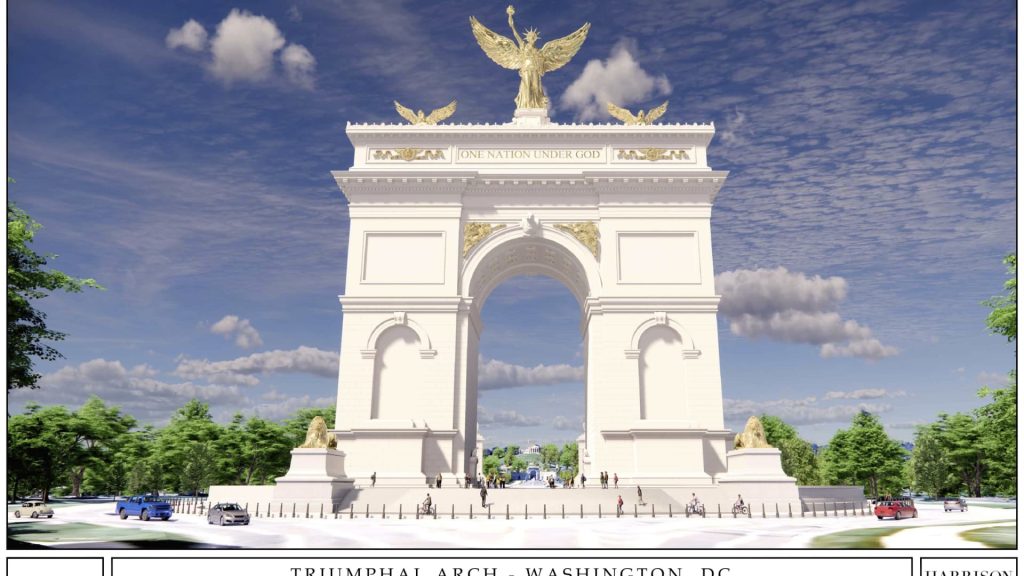
Newly released architectural plans reveal details of a contentious proposal for a towering commemorative structure that would stand 250 feet tall across from one of Washington’s most iconic landmarks. The monument would be positioned along the Potomac River, creating a dramatic presence in the national capital’s historic landscape.
The detailed drawings, presented by Harrison Design to the Commission of Fine Arts for consideration at their upcoming April meeting, depict an imposing white monument crowned with a golden Liberty figure and inscribed with patriotic messaging. The structure’s height would significantly exceed that of existing memorials in the area, making it a dominant feature of the Washington skyline.
According to the proposal, the monument would be constructed at Memorial Circle, a traffic roundabout situated near Arlington National Cemetery in Virginia, which serves as a gateway to downtown Washington. The location places the structure in close proximity to hallowed ground where military service members are interred.
The project represents part of broader commemorative initiatives planned to mark the 250th anniversary of American independence. Proponents have described the monument as potentially the most magnificent triumphal arch in the world, noting that numerous global cities feature such structures while the American capital lacks one.
However, the proposal has generated significant opposition from lawmakers and community members. Virginia Representative Don Beyer has strongly criticized the project, characterizing it as an expensive vanity initiative that would create traffic congestion, obstruct scenic views, and inappropriately tower over sacred burial grounds where veterans rest.
The Commission of Fine Arts, which holds authority over the proposal’s approval, recently greenlit another major renovation project involving a substantial White House ballroom expansion. However, that separate $400 million initiative was subsequently blocked by a federal judge who ruled that proper congressional authorization was lacking.
Financial details indicate that taxpayer funding would support the monument’s construction, with preliminary budget allocations totaling $15 million designated through federal humanities programs. The funding structure includes both direct appropriations and matching fund requirements.
Legal challenges have already emerged regarding the monument proposal. Vietnam War veterans and historians filed suit in federal court, arguing that the structure would obstruct important sight lines between Arlington National Cemetery and existing war memorials. A district judge recently declined to issue an immediate injunction blocking the project’s progression.
The controversy highlights ongoing tensions between commemorative ambitions and preservation of existing memorial landscapes in the nation’s capital. Critics argue that the scale and positioning of the proposed monument would fundamentally alter the character of one of America’s most revered memorial spaces.