Former Nurse Transforms Prison Experience Into Thriving All-Female Construction Business
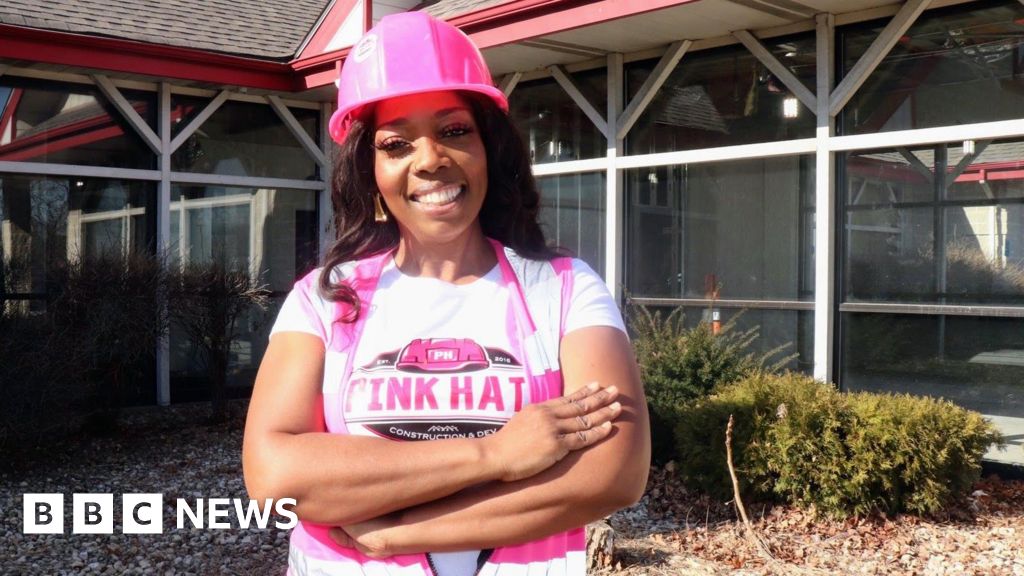
The United States has long been recognized as a nation that offers opportunities for redemption and fresh starts. A Chicago entrepreneur has exemplified this principle by transforming her life after incarceration, establishing a successful women-led construction enterprise that focuses on community revitalization.
Traci Quinn spent two decades working as a healthcare professional before her life took an unexpected turn. During her nursing career, she observed the therapeutic benefits of medical cannabis for patients dealing with conditions like epilepsy. This experience motivated her to venture into the medical cannabis industry.
In 2016, Quinn faced legal troubles when she was apprehended while transporting 50 pounds of cannabis into Tennessee, a state known for its stringent drug laws. Although she had legally purchased the substance in California, she was prosecuted and sentenced for drug trafficking, resulting in a three-year prison term.
The incarceration period proved to be deeply challenging yet transformative for Quinn. She describes the experience as initially devastating but ultimately purposeful, believing it was meant to redirect her life’s mission rather than simply punish her past actions.
During her time in prison, Quinn developed a vision for her post-release future: establishing a construction company dedicated to revitalizing Chicago’s most economically disadvantaged neighborhoods. The city faces significant challenges with racial and economic segregation, particularly affecting its southern districts.
Without any prior construction background, Quinn launched Pink Hats in 2020, coinciding with the global pandemic and shortly after her release. Her initial approach involved hiring subcontractors, but this strategy quickly proved problematic as she encountered unreliable workers who delivered substandard results.
The construction industry presented additional challenges beyond technical skills. As a woman entering a predominantly male field, Quinn faced considerable gender-based discrimination. Statistics show that women comprise only about 11% of the construction workforce nationwide, with Black women representing less than 7% of the sector.
Quinn encountered disrespectful treatment from male contractors and had to navigate both sexism and racism throughout her business development. She notes that as a Black woman, she constantly had to prove her qualifications and work twice as hard to gain respect, a pattern she had experienced even during her nursing career.
Determined to succeed, Quinn enrolled in construction courses and participated in mentorship programs with established industry companies. She emphasizes the importance of boldness and comprehensive knowledge for women working in construction.
Financial literacy presented another significant hurdle. When pursuing municipal contracts with Chicago, Quinn discovered she needed substantial upfront capital for project financing. Initially too embarrassed to admit her lack of understanding regarding financial terminology, she eventually sought assistance from nonprofit organizations that helped her organize her accounting systems and learn proper bidding procedures.
Pink Hats achieved remarkable growth, earning $125,000 in its inaugural year and reaching over $1 million in revenue by 2025. Quinn now employs her four daughters as core team members, supplemented by six part-time female staff members.
The company specializes in transforming residential and commercial properties while prioritizing assistance to marginalized communities. Recent projects include renovating a 30-room facility for women recovering from substance abuse in Chicago’s Austin neighborhood. This work earned Pink Hats recognition as Builder of the Year from the Southland Development Authority.
Currently, the company is undertaking its first new construction project: building ten affordable single-family homes for a Christian organization in western Chicago. Pink Hats also emphasizes environmental responsibility by incorporating sustainable materials, including hemp-based insulation that offers multiple benefits such as pest resistance, fire resistance, and mold prevention.
Quinn finds it ironically fitting that hemp, derived from the same plant family that led to her imprisonment, now plays a positive role in her construction work. She has ambitious expansion plans, including using a recent $250,000 city government grant to establish a training facility offering courses in various trades from painting to plumbing.
While these educational programs will welcome all interested participants, Quinn’s primary passion involves helping formerly incarcerated individuals reintegrate into society. Her ultimate vision includes creating transitional housing for women leaving prison, providing them with stable accommodation, work opportunities, financial education, and eventual homeownership possibilities.
Industry leaders recognize Quinn’s impact on the construction sector. Irma Holloway, who heads the Chicago-based Black Contractors Owners & Executives organization, praises Quinn’s leadership approach, emphasizing her professionalism, precision, and purposeful mission that helps redefine industry standards for others.
Reflecting on her journey, Quinn acknowledges how her experiences have fundamentally changed her perspective. She admits that her past prideful attitudes might have led her to judge others in similar situations, but now understands that her difficult path served important purposes for both her personal growth and her daughters’ development.